
Falls Township Directory Collections
Falls Township’s historical volumes are a dated, mixed collection rather than a continuous local annual run. The verified county editions are useful for a name, business, post-office wording, township reference, or defined inclusion category. They do not prove that every person or household appeared. Search the historical labels used for the place, then preserve the edition title, year, page or image, spelling, and locality wording with every result.
The strongest first stops combine county directory editions with the repositories that hold related papers. A library database may require a card or an in-library terminal. An archive may require an appointment, paid research, or an onsite visit. Those access limits matter as much as the date printed on a title page.
| Collection | Years verified | Where held | Access route |
|---|---|---|---|
| Bucks County directory editions | 1860, 1871, 1894, 1902, 1914 | BCFL, Ancestry, PA GenWeb, and repositories | Confirm the item and access method |
| Falls Friends and Fallsington material | 1683 to present, by series | Historic Fallsington | Appointment or paid research service |
| County archive series | 1683 onward, by series | Mercer Museum / Bucks County Archives | Onsite or paid remote research |
| Bristol directories | 1871 to 1954 | Grundy Library | Confirm whether an entry covers Falls |
| Newspapers and obituaries | Varies by title | Mercer, Grundy, BCFL, and Historic Fallsington | Repository or database access |
These are collections to interrogate, not a single roster. The full historical list has gaps, and no verified source supports calling it an uninterrupted Falls Township directory series. Note: A citation without a page or image is a lead to inspect, not a completed family-history finding.
Falls Township Directory Years
Five county editions have been verified: Boyd’s business directory from 1860, Solomon Hersey’s 1871 directory, James D. Scott’s 1894 directory, J. L. Kramer’s 1902 directory, and the 1914 Farm Journal farm and business directory. Each has a different purpose and inclusion rule. Their dates are useful milestones, not evidence of a book for every year in between.
The 1871 edition can offer business and post-office context. The 1894 edition lists county citizens in alphabetical order by borough, with voter and other material, post-office details, and community content. The 1902 work includes township or borough, occupation, post office, and stated tax or real-estate inclusion. The 1914 transcription route specifically includes Falls material.
- 1860: Boyd’s business directory supplies an early verified county edition.
- 1871: Hersey’s directory combines business, post-office, and county-history context.
- 1894: Scott’s edition adds an alphabetical county-citizen arrangement.
- 1902: Kramer’s directory identifies its township, occupation, post-office, and inclusion features.
- 1914: The farm and business directory provides the latest verified county edition in this set.
The useful number is five verified editions, not an invented annual run. That boundary helps prevent a researcher from treating a blank year as evidence that a household was absent.
Falls Township Historical Place Labels
Historic catalog and newspaper searches should rotate among Falls Township, Fallsington, Fairless Hills, and Levittown. These are locally meaningful labels, and postwar development makes the Fairless Hills and Levittown terms especially important in later records. A record’s post-office wording can point to a place context without changing the jurisdiction of the underlying event.
Bristol and Morrisville can appear in nearby lower-Bucks repository material, but they are not interchangeable with Falls. The closest documented Bristol directory run spans 1871 to 1954. Treat it as comparison material until the entry’s locality field supports a Falls connection.
Falls Township began in 1692, while early local courthouse activity was at Fallsington before moving to Bristol in 1705. That history explains why a repository description may use an older place name without proving that a particular person lived in the modern Township boundary.
Fallsington’s Local Research Shelf
Historic Fallsington’s collection is a hyperlocal route when a dated volume leaves a family or place question unresolved. Its appointment-based holdings include Falls Township deeds and legal material from 1794 to 1927, Friends genealogy from 1683 forward, Falls Meeting minute copies, family papers, telephone-company papers, maps, photographs, and newspaper material.
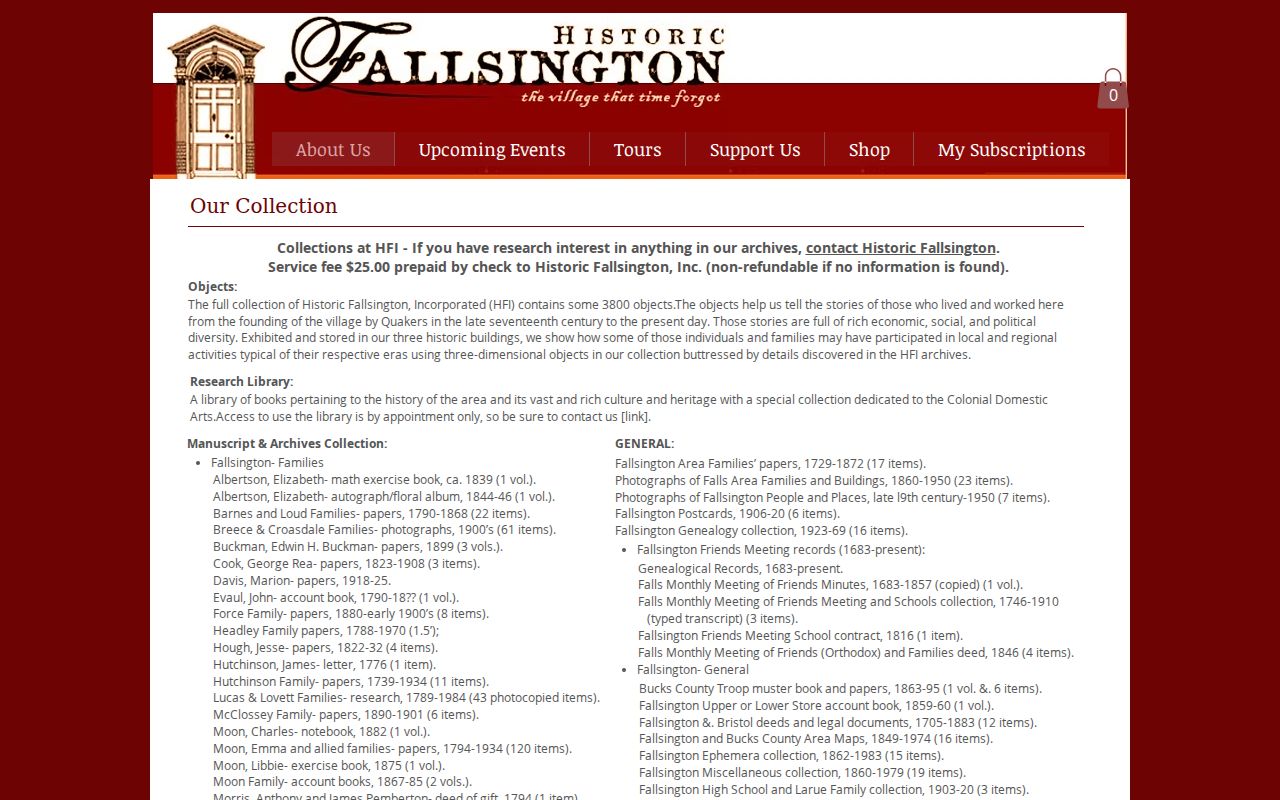
The collection is not a verified city-directory run, and its papers should not be treated as a complete subscriber list. It can supply relationship, place, deed, map, or newspaper context that a county directory cannot. Historic Fallsington accepts appointments and offers prepaid research for a defined inquiry, with the stated fee remaining nonrefundable if no result is found.
For an early Quaker-connected family, the Falls Meeting minutes and Friends genealogy may offer names and relationships. The 1908 to 1929 rural telephone papers are a narrow lead, not proof that they form a complete telephone directory. Note: Ask whether a specific item is physical, digitized, or available only through the research service.
Reading Falls Township Directory Entries
No scanned Falls entry or local abbreviation key was verified in the research. A careful reading therefore records what the edition actually displays rather than importing conventions from another town. The useful fields are limited to the published descriptions and the inspection packet: title and date, page or image, exact spelling, locality or post-office wording, business or occupation text where provided, and any address-like detail.
An entry is a dated observation. It may identify a person, business, locality, or defined directory category, but it does not establish every household member or current residence. Photograph or transcribe the page and the edition information before comparing it to a census, deed, obituary, or probate record.
| Edition and date | Identifies which collection and historical moment produced the entry. |
|---|---|
| Page or image | Lets another researcher inspect the exact printed source. |
| Name spelling | Preserve it as printed, including initials and variants. |
| Locality or post office | Supplies place wording that can be tested against other records. |
| Business, occupation, or address-like text | Record only fields actually shown in that edition. |
- Criss-cross directory
- A street-ordered directory section, if the consulted volume includes one; no Falls run with such a section was verified here.
- Householder index
- An arrangement under a household head, if supplied by a particular collection rather than assumed for all editions.
- Abbreviation key
- The explanation of a volume’s short forms; inspect and capture it when the volume provides one.
Falls Township Archive Record Routes
Bucks County Archives at Mercer fills the offline gap around a city-directory result with county-created records. Its holdings include deed books and grantor-grantee indexes from 1684 to 1919, naturalization files, marriage licenses, divorce records, tavern licenses, wills and administrations, and mechanics liens. The archive says its historical records are not online.
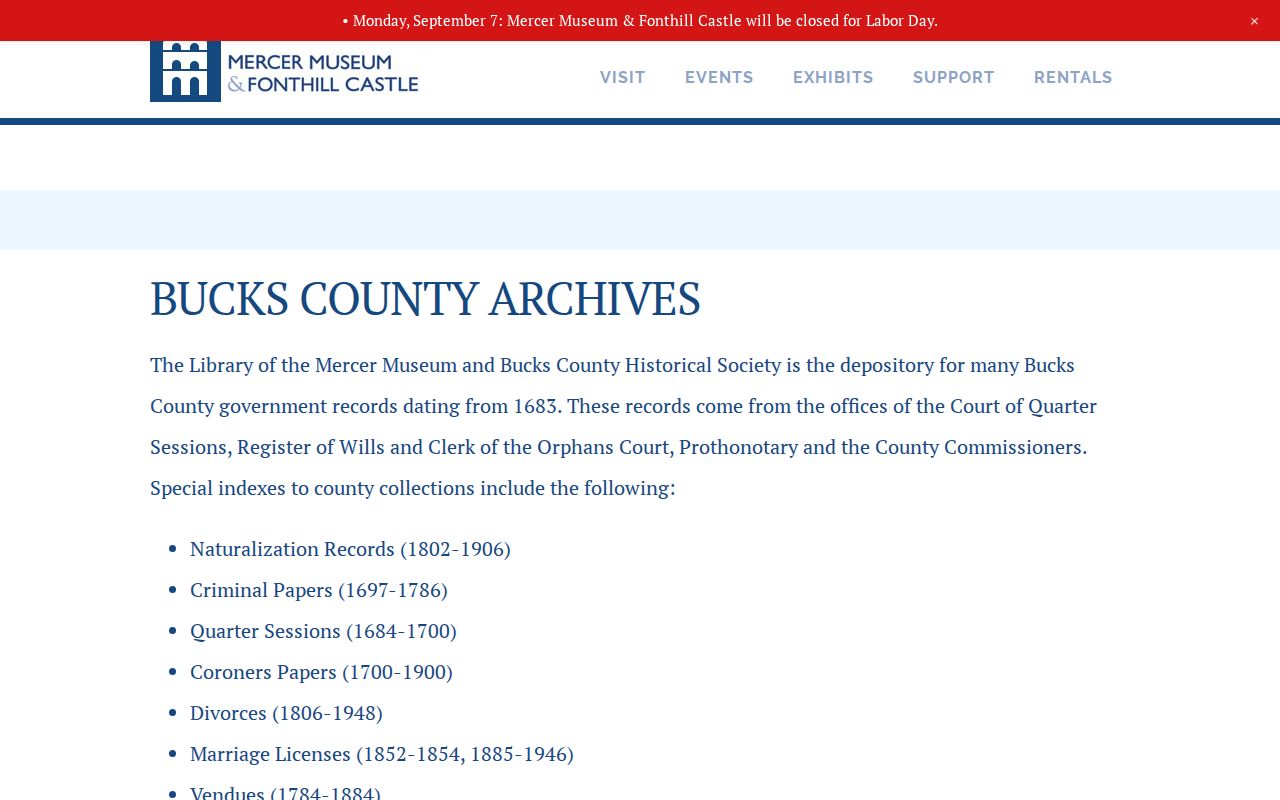
Mercer offers an onsite route and paid remote research. Visits require the stated sign-in, admission or membership conditions, and camera-license rules. Its named obituary indexes and retrieval service can be a useful next channel when a directory date needs a death, family, or place check.
The archive is strongest for official county series, while Historic Fallsington is stronger for local family and place papers. Keep those roles separate in research notes. An online catalog result is an access lead, not the archive document itself.
Falls Township Library Directory Routes
Bucks County Free Library family-history guidance identifies several useful collections: Ancestry Library Edition for census, vital, wills, directory material, immigration, military, and obituary material; HeritageQuest for census and directory material; and Power Library for historic books, photographs, postcards, newspapers, oral histories, and documents. Access conditions can differ by service and may depend on a library card, PIN, or an in-library session.
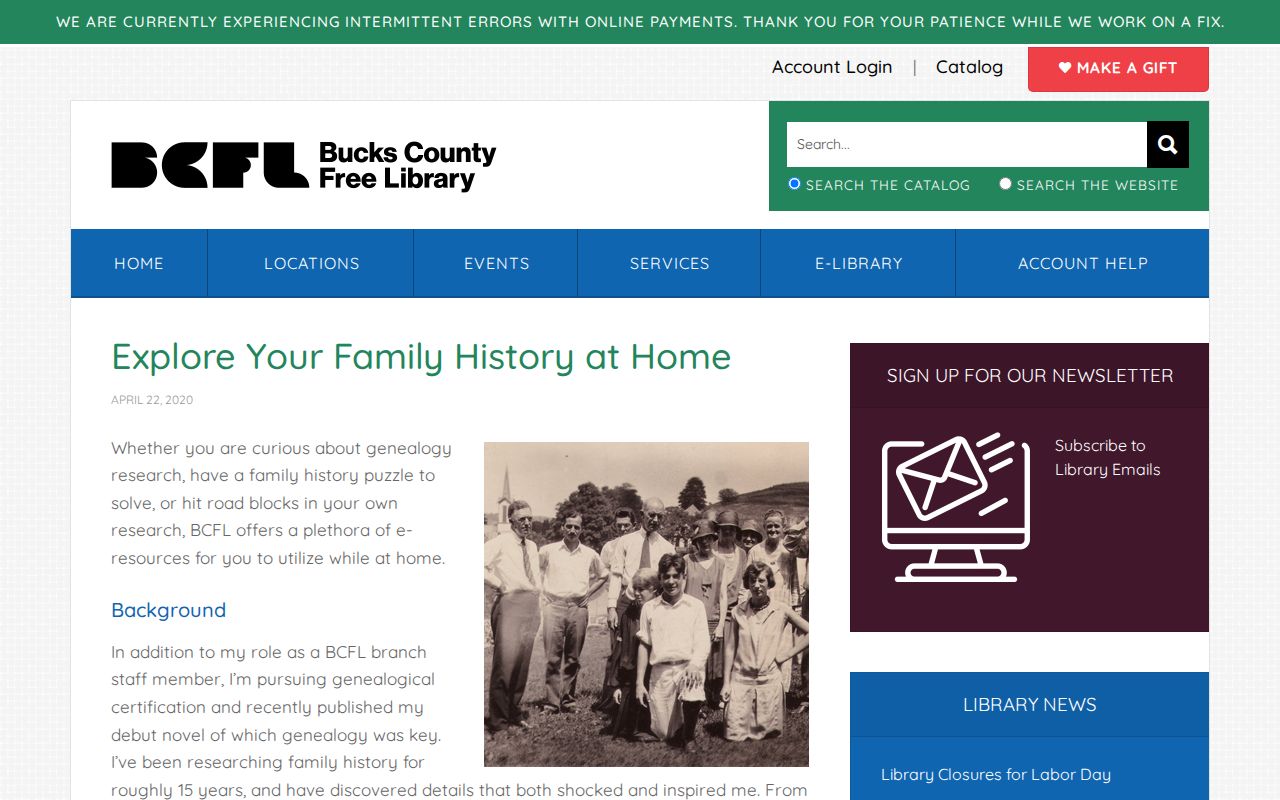
The practical branch identified for this work is Levittown, at 7311 New Falls Road, Levittown, PA 19055, telephone 215-949-2324. Ask staff a narrow question: which Falls Township, Fallsington, Fairless Hills, or Levittown directories, telephone books, reverse directories, newspapers, yearbooks, or obituary indexes cover the stated year?
Ask the staff to distinguish a physical shelf item from a licensed database and to name the access channel. The Grundy Library collections add Bristol history, cemetery transcriptions, yearbooks, and Courier Times material, but a nearby-city result still needs a locality check.
Tracing Falls Township Households
Trace one household forward or backward only after capturing the directory edition and locality wording. Use the next available edition to test whether the spelling, post office, business text, or address-like detail persists. Then pair the directory year with the nearest available federal census instead of treating either source as a complete account of a household.
A property-related clue can move into assessment or Recorder material; an obituary or newspaper mention can lead toward probate. A disappearance has several possible causes, including a move, death, a changed label, or an inclusion rule. The source does not support choosing one explanation without a second record.
- Record the edition, page or image, exact name spelling, and locality wording.
- Search the next verified directory edition using the same name and alternate Falls labels.
- Compare the result with the nearest available census and preserve differences rather than smoothing them away.
- Test property clues against the deed or legal-description trail when the evidence points to land.
- Use newspaper, obituary, probate, or archive channels to resolve a move, death, or relationship question.
For a current address-based record trail, the Falls Township street directory uses the modern property route rather than rebuilding the historical shelf. Note: A shared surname or a similar post-office label is not enough to merge two historical entries.
Falls Township Municipal Record Requests
A dated directory entry can suggest a place and period, but the Township is not the keeper of deeds, court files, marriage licenses, or state birth and death certificates. It does hold Township administrative, permitting, zoning, planning, map, police-request, and meeting material. That makes a defined municipal record useful only when it answers a separate, address-and-date-specific question.
The Falls Township Right-to-Know route accepts a Township or Uniform form by email, fax, mail, or in person. Ask for identifiable records rather than answers to questions. Pennsylvania Right-to-Know Law normally calls for a written grant, denial, or extension notice within five business days, with a qualifying extension of up to 30 calendar days.
Falls says permit applications use BS&A, including address, name, and parcel property-search options. The research did not establish historic coverage, export behavior, or a sample result, so do not treat the portal as a complete historical permit index. A defined request to the custodian is the documented fallback for older municipal material.
Falls Township Historical Records After 1950
Postwar records deserve extra place-label care. The official 2004 plan reports that U.S. Steel announced Fairless Works in 1950, construction began in 1951, full production followed in 1953, and more than 9,000 homes were built from 1950 to 1970. Fairless Hills and Levittown therefore become especially useful catalog and newspaper search terms for later historical work.
Fallsington remains an older crossroads and record anchor, while Pennsbury Manor, the Delaware River, canal, rail, Route 13, and later highways influence how a source describes place. These are search terms for a catalog or map, not substitutes for a source’s own locality field.
The 2025 Recorder preservation work and records-improvement reporting show that older deed access remains an active preservation issue. A dated directory hit gains strength when it is paired with the correct historical collection, an independently dated record, and its original place wording.